One toolset.Three ways to work.
Open your EPANET model in the browser, on your Mac or on your phone. The same networks, in the app that fits where you are working.
3
Apps: Web, Mac, mobile
EPANET
Compatible
.inp
Opens on all three
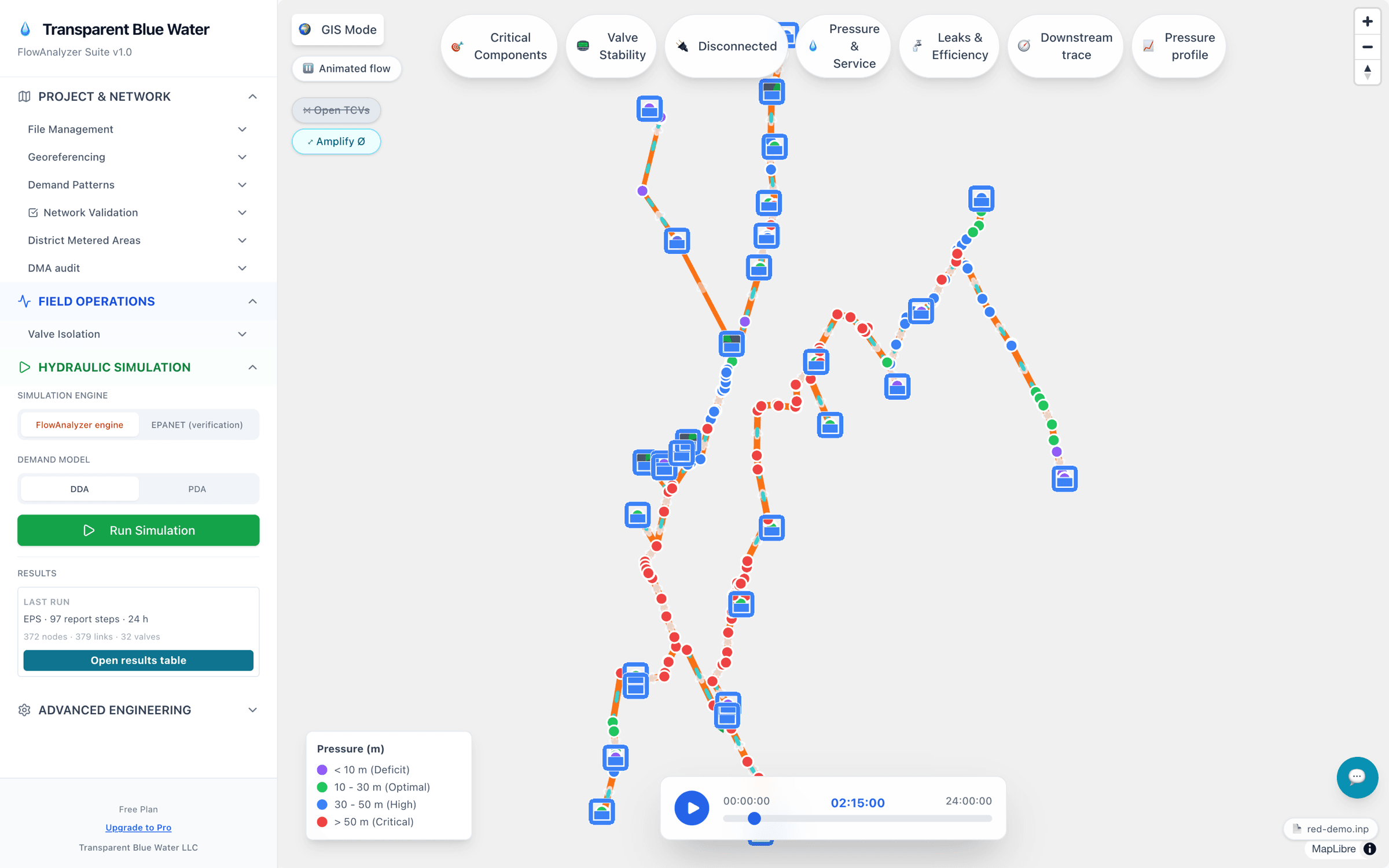
FlowAnalyzer Web: an example network solved in the browser — 372 nodes, 24-hour extended-period simulation.
One toolset, three ways to work
Model in the browser, work natively on your Mac, take it to the field on your phone. Same EPANET networks.
FlowAnalyzer Web
In the browser · no install
- Built-in hydraulic solver: extended-period simulation in your browser, checked against EPANET 2.2
- Valve isolation: the valves to close, what goes out of service, and a PDF work order
- N-1 criticality: pipes ranked by the demand left unserved
- Pressure profiles: ground, hydraulic grade line and pressure at any hour
- Scenarios (Pro): duplicate the network, edit the copy and see what differs; export .inp for EPANET Desktop
FlowAnalyzer Mac
Native for macOS
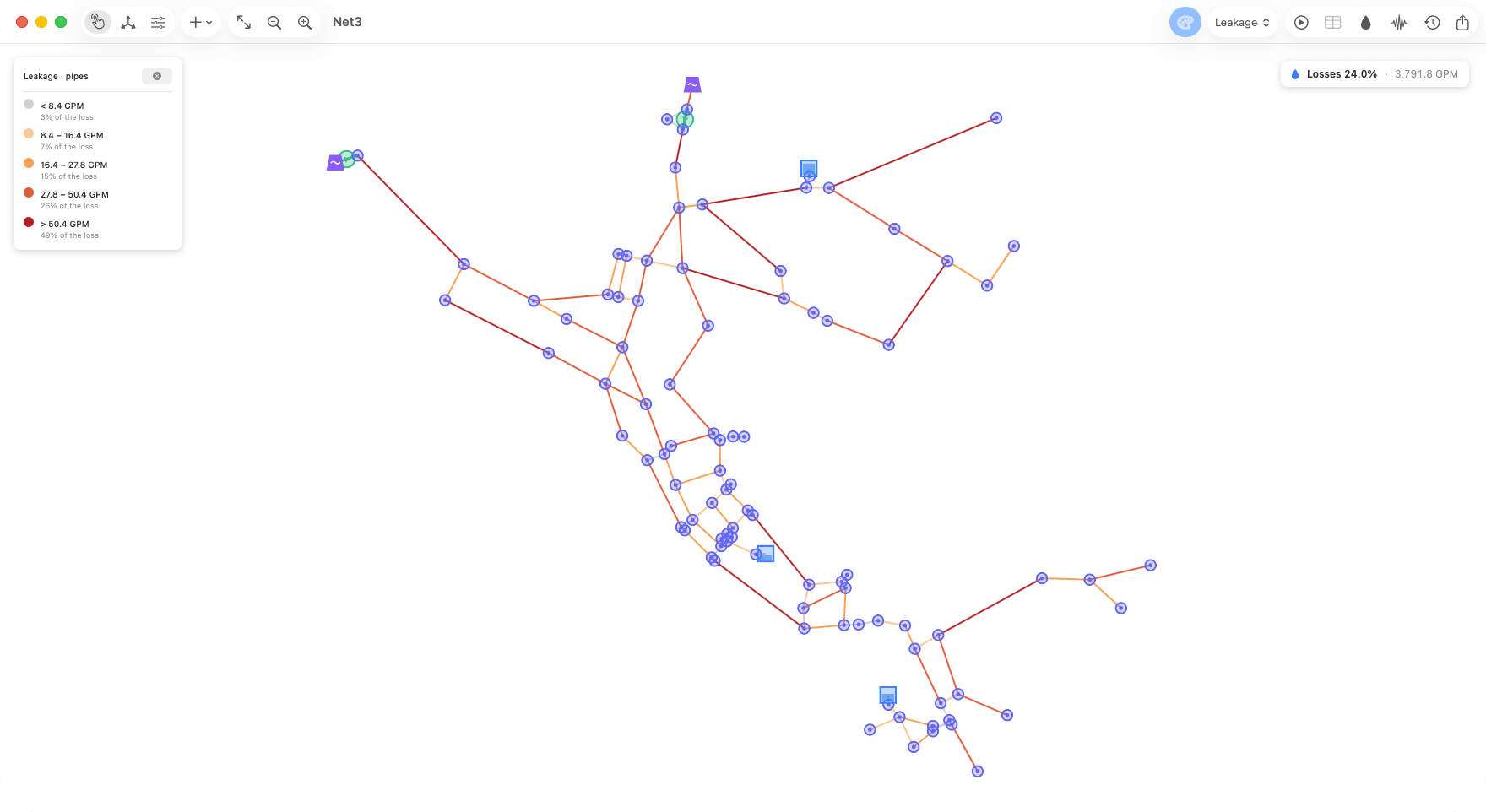
- Leak model calibrated with your non-revenue water figure: a map of modeled leakage and the pipes losing the most
- Compare what adjusting or adding a PRV would recover, and the lowest pressure each scenario leaves
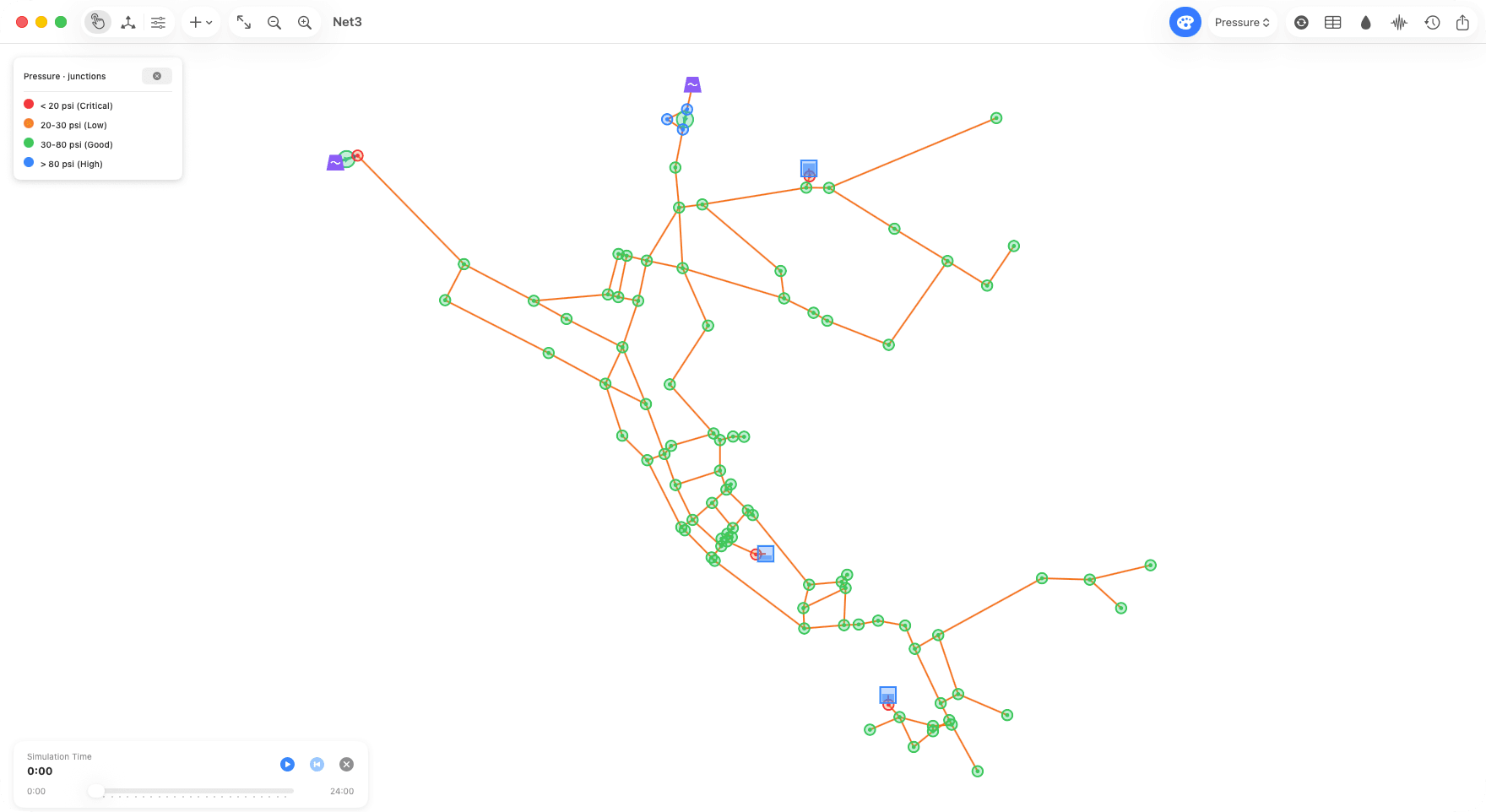
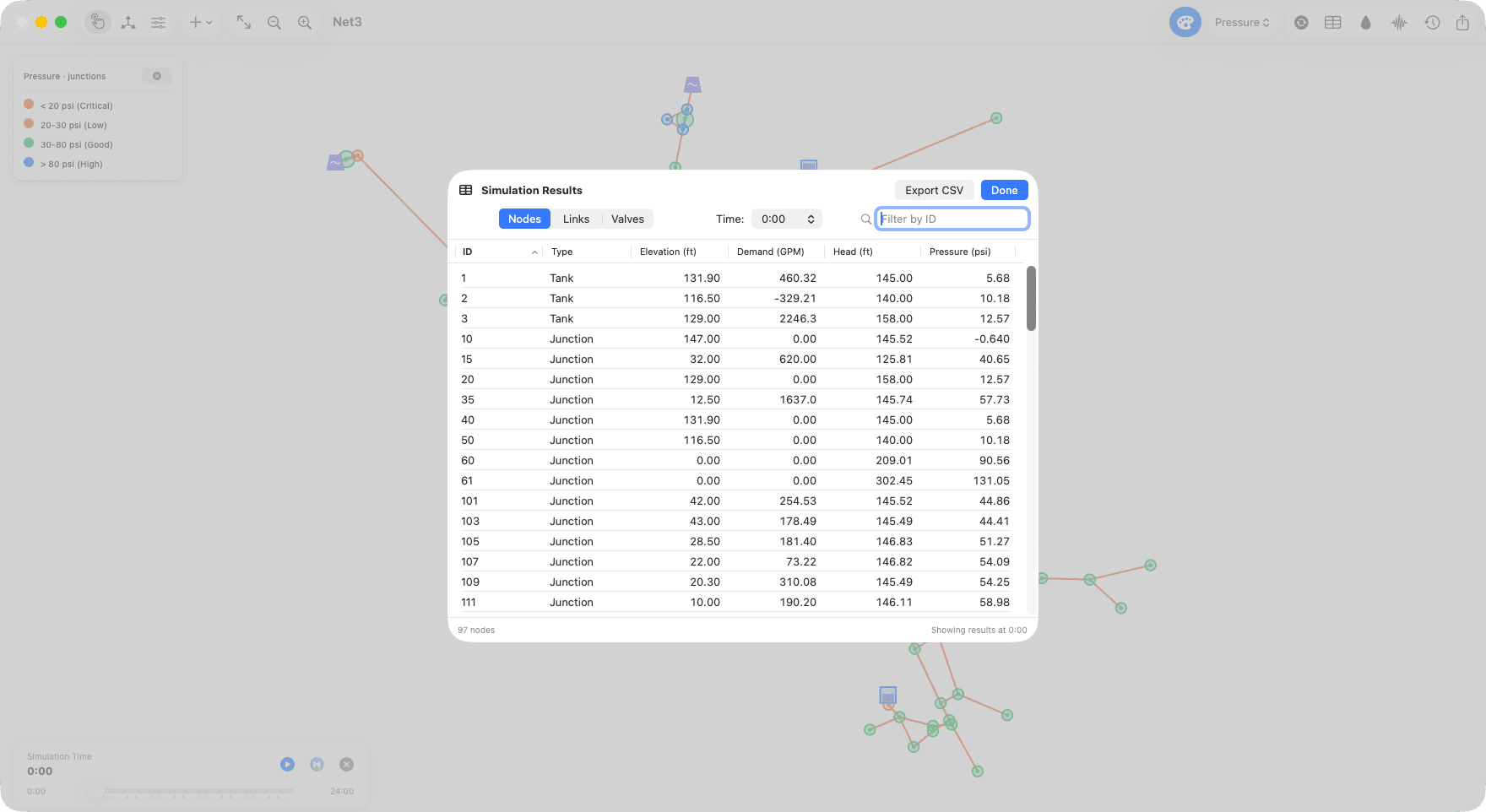
- Open an EPANET .inp, simulate, and read results on the map and in tables you can export to CSV
- Edit the network, save to .inp, and share project files with FlowAnalyzer Web
- Build a complete EPANET model in the app: layout, options, curves and controls
FlowAnalyzer Mobile
iOS and Android · works without internet
- Open any EPANET .inp file, of any size, and simulate it with the EPANET 2.3.5 engine, steady state or extended period
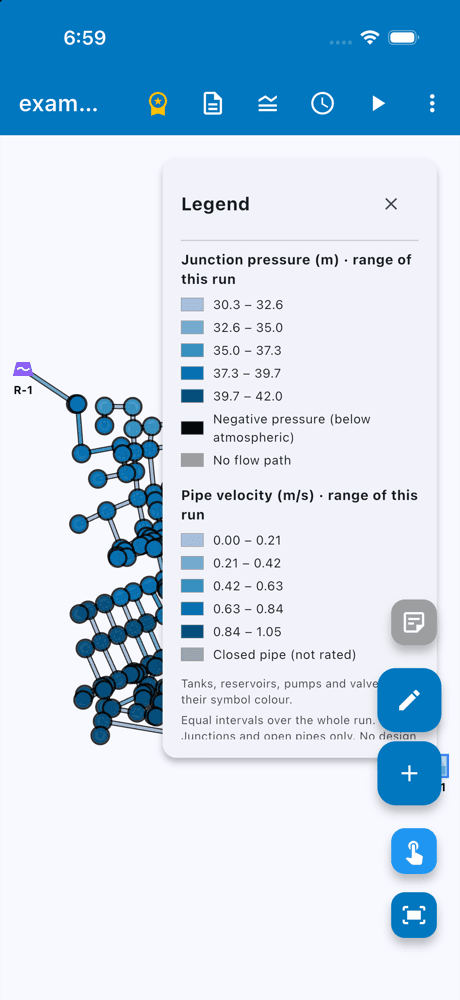
- See pressure and velocity in color across the network, hour by hour on an interactive timeline
- Leave field notes with photos on the network, saved on the device
- Export results to PDF and CSV, and the network as an .inp file (Pro, one-time purchase)
From Your EPANET Model to Results
Import, simulate, analyze, and export — in the browser, on your Mac or on your phone.
Import
Load your EPANET .inp — or start from an example
Simulate
Run the network, steady state or extended period
Analyze
Read pressures and flows on the map and in tables
Export
Take the results out as CSV, and PDF where the app offers it
Solve, isolate, rank and profile — in your browser
Run your network with FlowAnalyzer's own engine, check it against EPANET, and know which valves to close and which pipes matter most.
- Hydraulic solver built in: runs extended-period simulations in your browser with FlowAnalyzer's own engine (Rust compiled to WebAssembly), checked against EPANET 2.2 case by case, and an EPANET engine to verify any run.
- Valve isolation: pick a pipe and get the valves to close, the links and nodes left out of service, the affected demand and a PDF work order.
- N-1 criticality: closes each pipe in turn, re-solves the network and ranks pipes by the demand left unserved.
- Pressure profiles: click pipes in series and see ground, hydraulic grade line and pressure at any hour; save, export CSV/PNG.
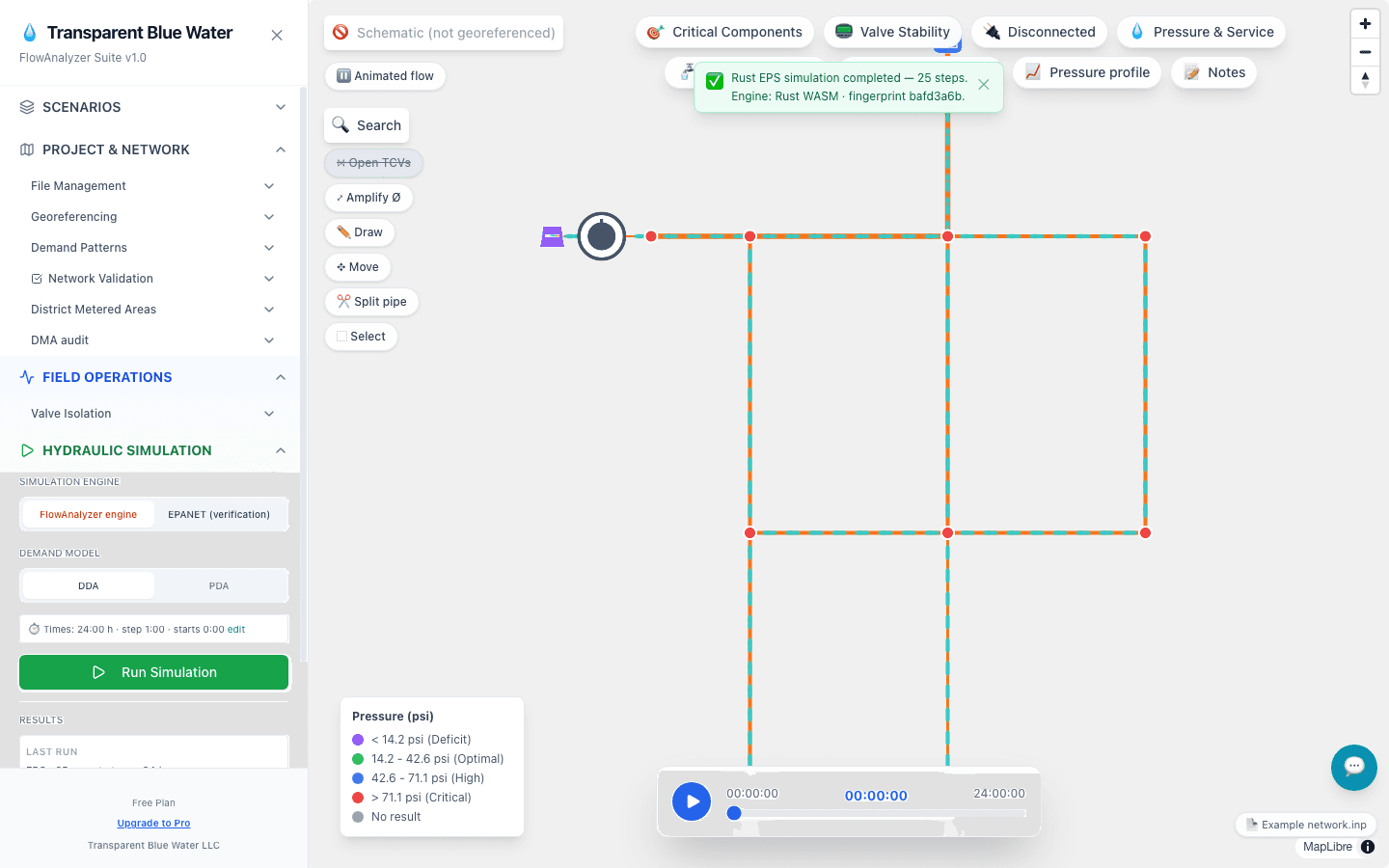
Complete Feature Set
Everything you need to manage your water network efficiently.
FlowAnalyzer Web
Browser-based platform
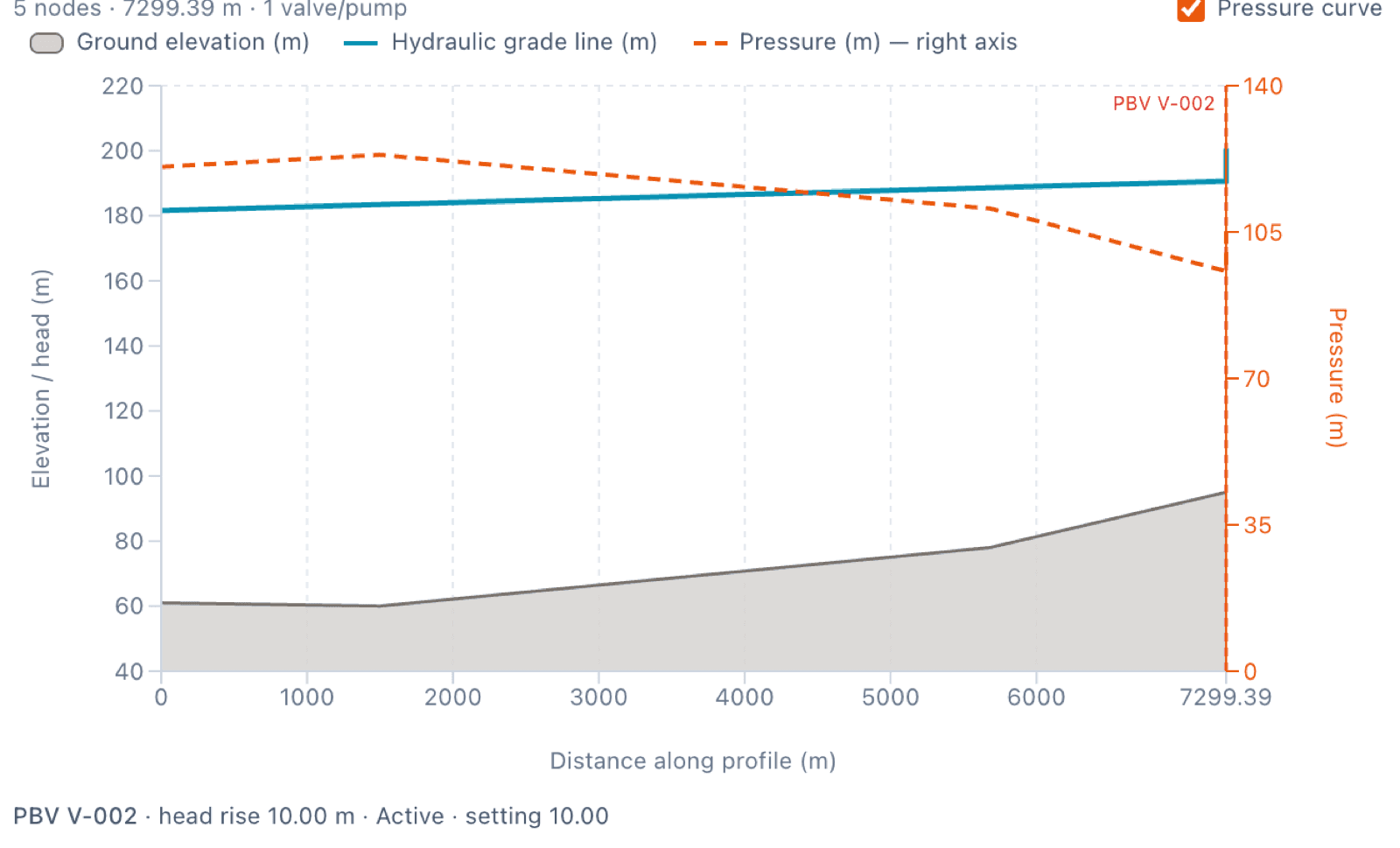
Pressure profiles
Click a pipe and the profile extends on its own along the main, stopping at every branch so you choose where it goes. Ground elevation, hydraulic grade line and pressure on a single chart, at any hour of the 24-hour run — and out to CSV or PNG.
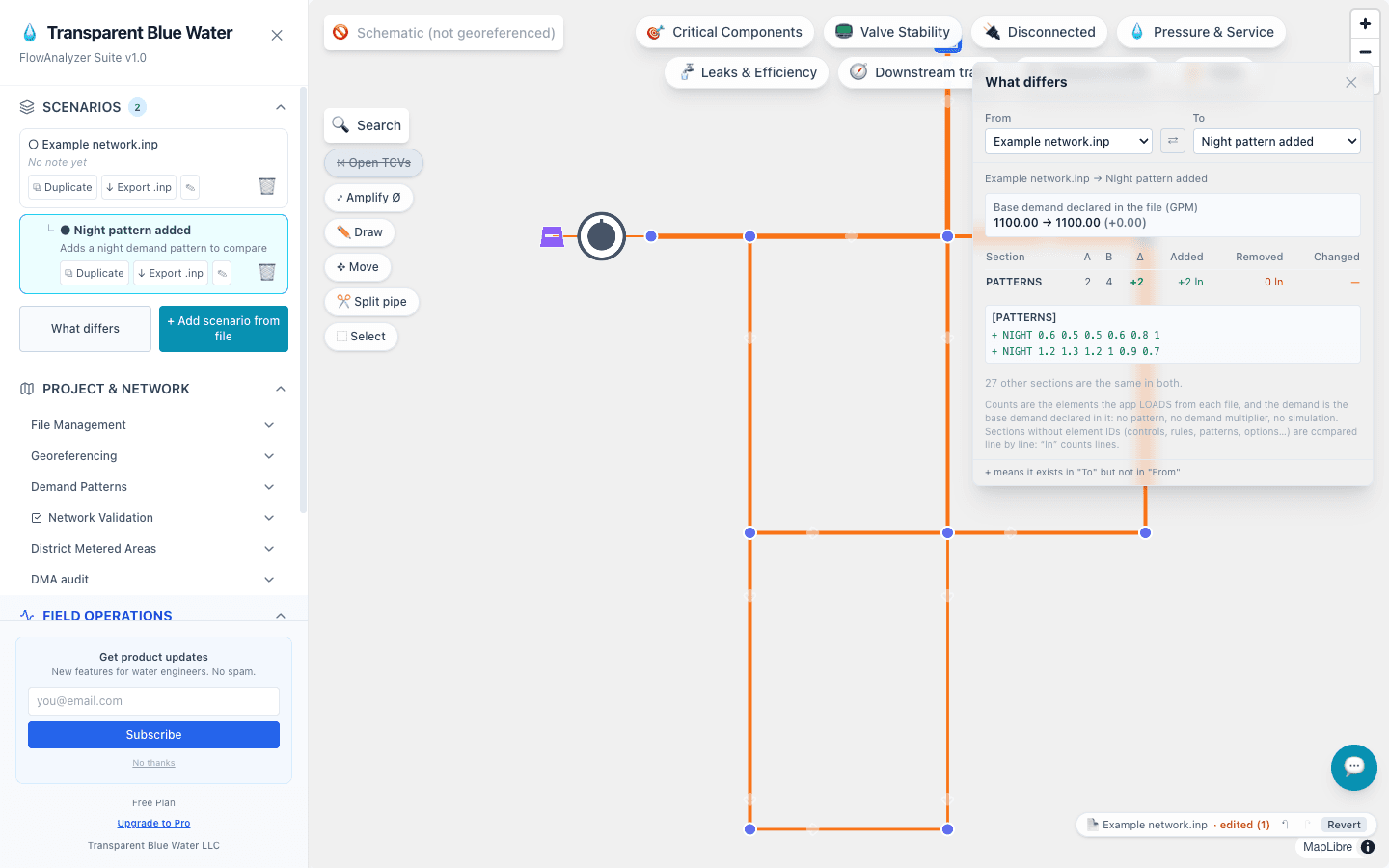
Scenarios to compare alternatives
Duplicate a network into a parent-child tree, edit the copy and open «What differs» for a line-by-line comparison of elements and sections like controls, rules and patterns. «Export .inp» gives a file EPANET 2.2 Desktop opens.
Water loss and pressure management, native on your Mac
Calibrate a leak model with your non-revenue water figure, see where the water is going and compare what pressure management would recover — then open, edit or build the EPANET model in the same app.
- Leak model calibrated to your non-revenue water figure: a map of modeled leakage and a ranked list of the pipes losing the most.
- Compare what adjusting or adding a PRV would recover (L/s, m³/month, money) and the lowest pressure each scenario leaves.
- Open an EPANET .inp, simulate, and read pressures, flows and velocities on the map and in tables you can export to CSV; charts of each element's time series.
- Edit the network (several elements at once, undo), save to .inp, and open or save project files shared with FlowAnalyzer Web.
- Build a complete EPANET model in the app: draw the layout with the Pipe tool, set the network options (units, head loss formula, times), add curves for tanks and valves, and create controls.
Field modeling, no internet needed
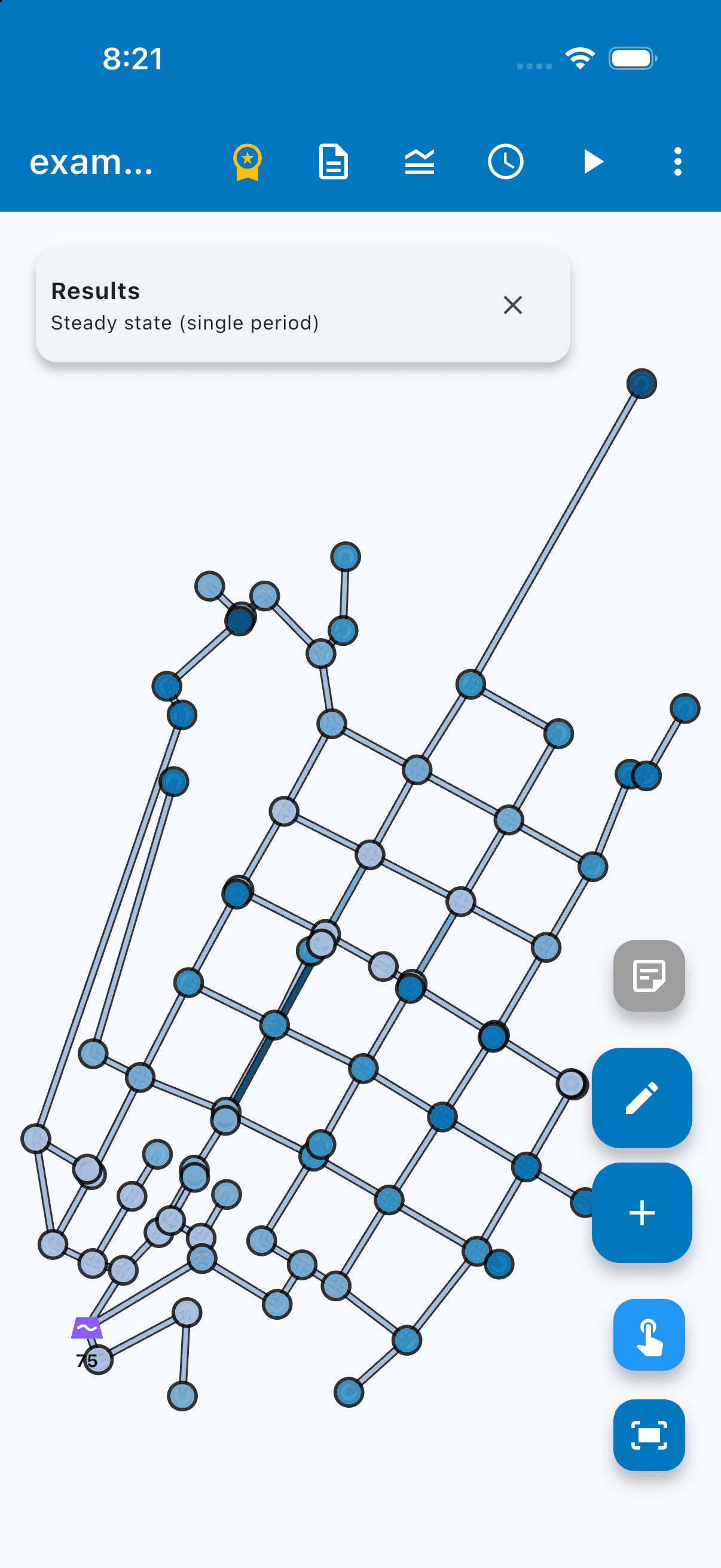
Open your EPANET network on your phone, simulate it and read pressures and velocities right where the pipe is — no signal needed.
- Open any EPANET .inp file, of any size, and simulate it with the EPANET 2.3.5 engine, steady state or extended period.
- See pressure and velocity in color across the network, hour by hour on an interactive timeline.
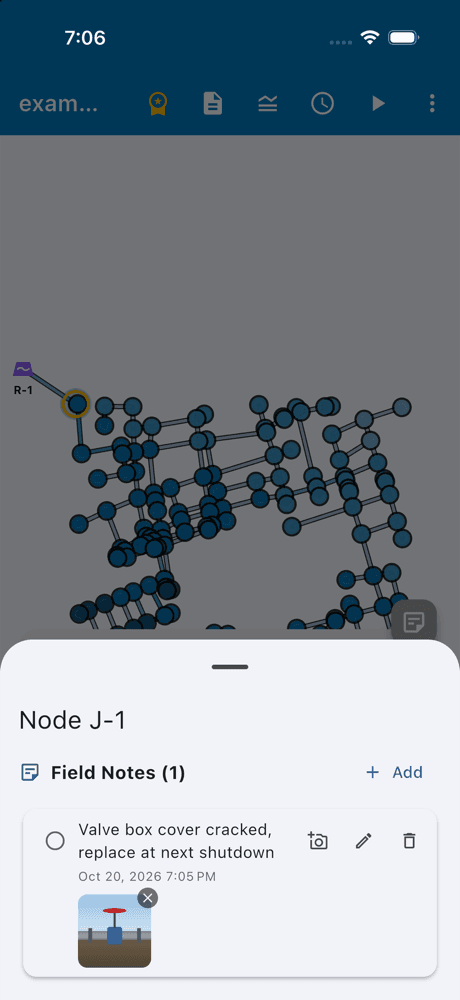
- Leave field notes with photos on the network, saved on the device.
- Export results to PDF and CSV, and the network as an .inp file (Pro, one-time purchase).
The whole toolset, free
Every module in FlowAnalyzer Web is open right now — no license, no node limit, no credit card. If it earns its place in your work, you can help keep it that way.
FlowAnalyzer Web
The complete platform, in your browser. Your model never leaves your machine.
- Import your EPANET .inp — or load the example model
- FlowAnalyzer's own engine (Rust/WASM) in your browser, with EPANET alongside to verify any run
- Valve isolation with a PDF work order
- N-1 criticality: pipes ranked by the demand left unserved
- Pressure profiles along a path, with CSV/PNG export
Support FlowAnalyzer
FlowAnalyzer is built by a small team and given away because water utilities need the tools more than we need the toll booth. If it saved you a day of work, you can help pay for the next one.
- Your support pays for engine work, servers and hours
- It unlocks nothing — every module stays open for everyone
- Tell us what you need next and it goes to the top of the list
- Utilities, universities and consultancies: write to us about a joint pilot
Nothing on this page is behind a paywall. Supporting the project is a choice, never a requirement.